
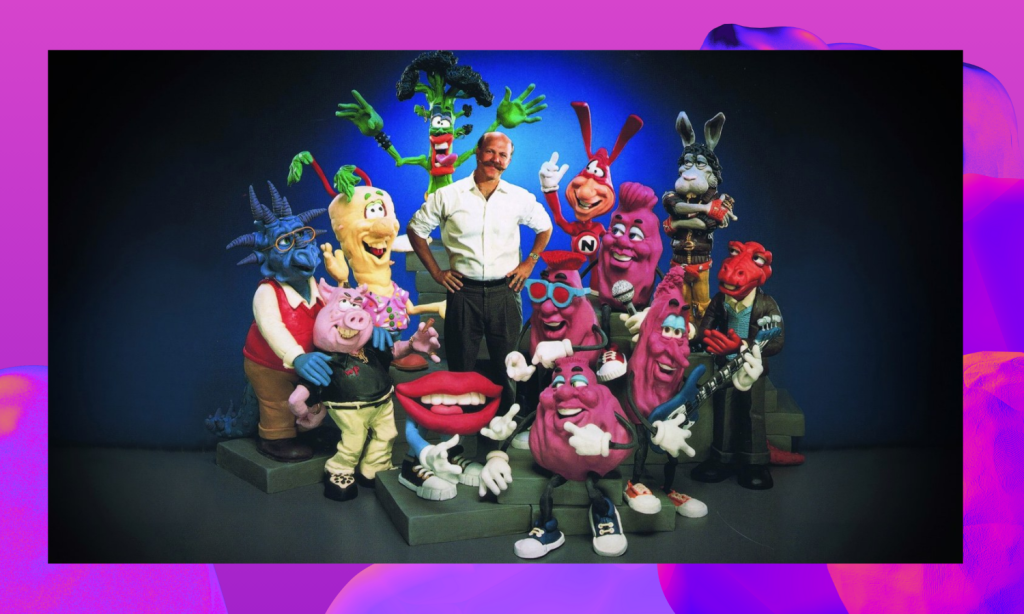
Long time fans of this series (or my sister-series, Cat’s Picks), will know how much I dig underground and obscure media. There was just something in the air in the late 1960s through the 1970s that pushed artists and creators to experiment with their crafts, explore topics and themes outside of the mainstream, and go full force with expression without censorship. I already covered the history behind underground comics in an earlier article, but I haven’t had the excuse – yet- to write about another side of the Underground Movement… Cartoons! While no individual person can claim to have started the underground animation movement, Will Vinton comes to the forefront of my mind, a remarkable creator that left an irreversible mark on stop-motion animation, and the animation industry as a whole. For the millennials reading this article, you might not recognize his name, but you’ve certainly seen his works, in crude advertisements for raisins and M&Ms, special effects in movies, and legendary animated music videos- all done in clay. Let’s turn back the clock to the birth of “claymation” in the tail end of the 1960s.
The Creation of Claymation
Vinton’s first endeavors into the world of filmmaking was during his undergraduate studies at University of California, Berkley. At Berkley, Vinton experienced the underground counter-culture movement first hand, making two short films and a full-length documentary of the movements and protests of the time. His biggest interest would start, as most things do, with a block of clay and a group of friends. Claymation, a term Vinton would later claim to have coined, was born. Vinton’s camera was set up in one corner of the table, as the group of experimental filmmakers, artists, students, and creatives pulled and pushed and clawed at the block, taking photos intermediately. When the sequential photos were played through, animation was created- but it was like nothing Vinton or the other artists had seen before. The claymation was raw, more reactive, more human than the clean cut animated stuff that was showing across theaters in America. It’s roughness reflected the values of the counter-culture movements, balancing the line between utter chaos and unrestrained creative freedom. After a few years of studying filmmaking, architecture, and physics, Vinton graduated from Berkley with an undergraduate degree in architecture in 1970, to appease his apprehensive parents. After all, a career in architecture was more likely to provide for a family, a household and a future, more than a degree in filmmaking.
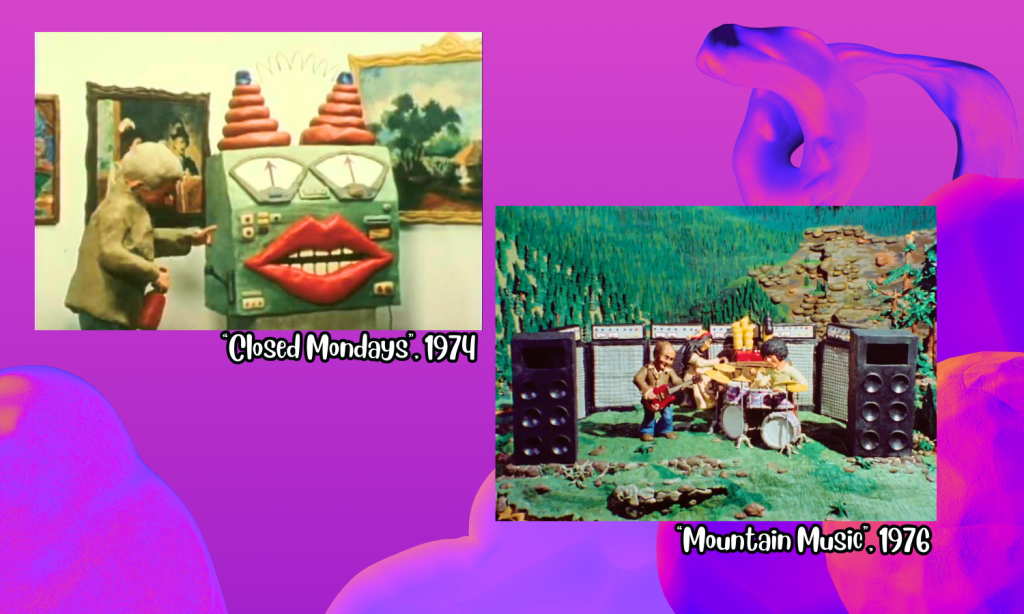
This would not be the end of Vinton’s growing fascination with claymation, and he relocated to Portland to be closer to the thriving artistic community. In the early 1970s, Vinton would meet and collaborate with Bob Garnier, a filmmaker, animator and lover of the craft. Garnier would help Vinton take the experimental artform to the next level, pushing for storytelling in the shorts. Work would be done in Vinton’s basement, and with Vinton’s Bolex Rex-5 16mm camera, the pair started working. It would take them nearly two years to animate Closed Mondays, which was rejected from nearly every film festival they submitted to but ironically won the Oscar for the Best Animated Short in 1974. Vinton and Garnier’s success with Closed Mondays, would inspire the next claymation short film, leaning back on Vinton’s roots as a counterculture filmmaker. The highly ambitious and environmentally focused Mountain Music (1976) would also mark the end of Garnier’s professional partnership with Vinton and claymation, and the two would never collaborate again.
With two successful short films and an Oscar in hand, Vinton started finding more and more commercial work- and he needed more animators. Between client work, the now-established Will Vinton Studios started on their first in-house produced series of claymation shorts, based on fairytales, with one being nominated for the Best Animated Short at the Oscars in 1978. More shorts were created during this time, some more experimental than others; Legacy (1979), Dinosaur (1980), The Creation (1981), and The Great Cognito (1982). Two would be nominated for the Best Animated Short award. Vinton would take a step back from the production end of the animation work, instead focusing on bringing in more commercial and contract work and making a name for his growing studio. Claymation was also utilized in practical special effects, notably used to animate the main villain in Disney’s Return to Oz (1985), nominated for Best Special Effects Work.
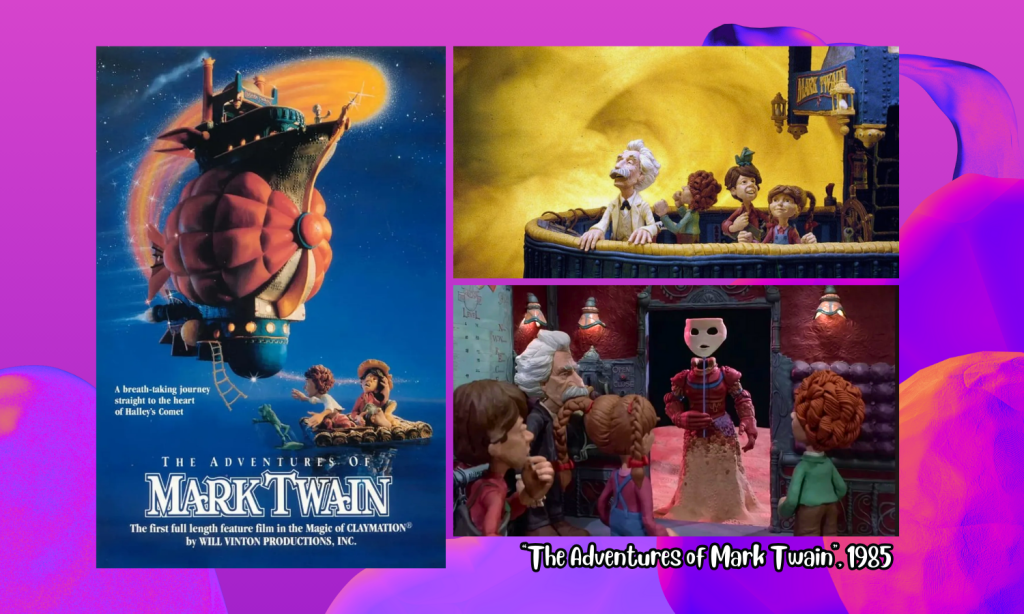
Vinton’s dream was to become like Walt Disney, establish his own animation studio and make a full length feature animated film based on a beloved childhood story. In 1985, the second goal of his dream came true- but unlike Disney, Vinton’s first feature animated film was a financial flop. The Adventures of Mark Twain, fully animated using claymation, based loosely on the characters and stories published by Mark Twain, was horribly marketed and terrified children. It’s one of those films that doesn’t quite fit an exact audience- too juvenile for adults, too mature and scary for children- but since its release on VHS, and later on DVD, Mark Twain has gained a cult classic status. Still, Will Vinton pushed forward, and after working with Disney on Return to Oz, his studio would be contracted to make animated segments for Captain EO, a Michael Jackson themed ride in Epcot. This would lead into another collaboration with Michael Jackson, an animated music video for Speed Demon, featured in the Moonwalker (1988) anthology film.
Vinton’s Grapevine Era
Meanwhile, claymation’s usage in advertising campaigns and commercials started to skyrocket. In 1986, Vinton would produce one of the most culturally significant commercial series of all time- and of all things, it would be for California Raisins. Starting as a collaboration between the advertising firm Foote, Cone & Belding (FCB), California Raisin Advisory Board and Will Vinton Studios, the commercial focuses on a band of fictional anthropomorphic raisins performing a rendition of “I Heard it Through the Grapevine” (1968). Not only did the commercial succeed in its original goal, with raisins becoming a popular snack food in the late 1980s, but the characters and concept became popular enough for merchandise including toys, official albums by the fictional California Raisins band, a nation-wide fan club with published magazines about the characters, nationally broadcast and syndicated holiday television specials, and a traditionally animated cartoon show released in 1989. The ad campaign would officially end in 2002, with the death of the California Raisin Advisory Board; this would be Will Vinton Studios longest running partnership with another business.
On the flipside of singing and dancing raisins, was the deviously zany mascot of Domino’s Pizza- the chaotic Noid! Donned in a red bunny costume, the Noid was the archnemesis of anyone who wanted to eat their delicious slice of pizza- and it was imperative that you “avoid the Noid” at all costs! Coinciding with the debut of the Noid was Domino’s “30 Minute Guarantee!” promotion; if your order wasn’t delivered within 30 minutes of ordering, it would be free. The deal would unfortunately cause a lot of unnecessary accidents on the road and a fatal car crash during a pizza delivery. In the claymation marketing, the Noid would race against Domino’s Pizza delivery drivers furthering the impact of the “30 Minute” or free deal. The Noid, and their impossibly quick delivery promotional deal, would be retired by Pizza Hut in 1995, but has been revived, in the Will Vinton design, on merchandising and modern advertisements through the past three decades.
Too Much, Too Fast
In just two decades, Will Vinton had grown his claymation empire from his basement in Portland with two animators, to a fully furnished brick-and-mortar studio building with hundreds of employees, and hundreds and hundreds of pounds of clay. When Will Vinton and Bob Gardiner received their Oscar in 1974, Vinton’s parents warned him that it was too much, and too fast. The fame, and the idea of stardom, was something that Will Vinton pushed to achieve, and it was this motivation that misdirected him from the ever-growing issue- the faltering financial state of the business. In the early 1990s, an experimental new type of animation was taking over commercial jobs, the same ones that kept Will Vinton Studios afloat through the worst periods of its history. Vinton would have to make a choice- keep making claymation films and struggle to find contract work for his dwindling team of animators, or learn to adapt to the new medium. When Hershey Chocolates reached out to Vinton for an updated look for their M&M mascots, it was the perfect excuse to move the animation from physical, malleable clay to Computer Generated Images (CGI). These designs by Will Vinton Studios in 1995 are the same M&M mascots that continue to be used in official advertisement campaigns, merchandise, clothing, and packaging, thirty years later.
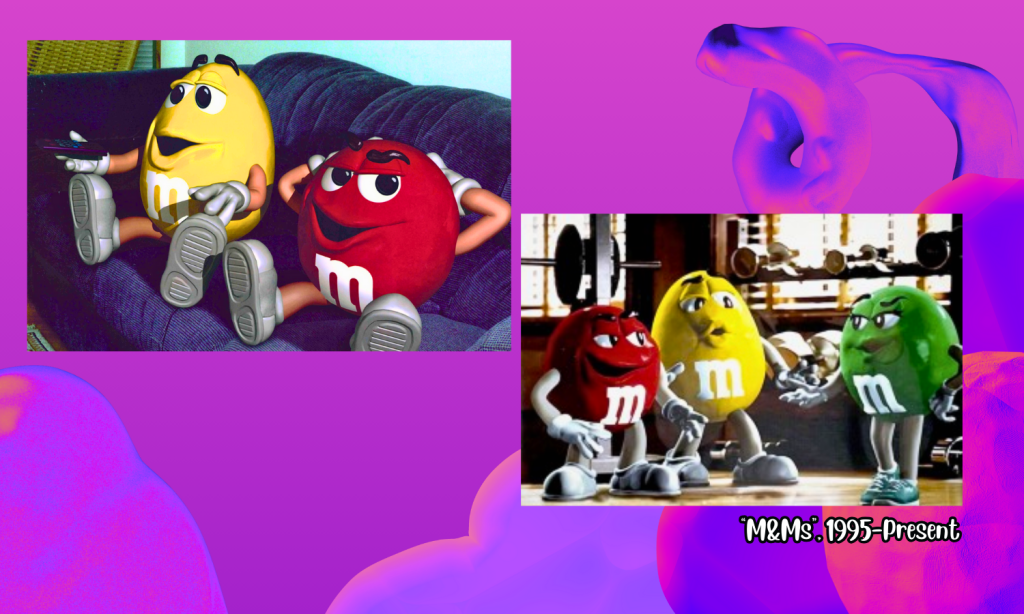
Investments with the Computer Generated Images technology was not cheap, and although the M&M commercials helped with paying the rent on the building, Vinton was forced to let go of more of his employees. In order to continue paying the skeleton crew, Vinton asked around from investments from local businesses and CEOs- and selling some of his own share in the studio. One investor, whose son was interested in stop motion animation, swooped in to help Vinton – Nike’s CEO, Phil Knight. After two failed claymation animated shows, both aimed towards an adult audience and cancelled after one season, Will Vinton Studios was fully in the red, and the recent investors were rightfully upset. Ever the dreamer, Vinton had promised too much and was unable to provide the results requested. He wanted to make his own theme park, creating a sleazy pig mascot as the face of the studio, and was hoping that the millennial would bring new opportunities for claymation work. For Phil Knight, who believed Vinton was losing control of his studio, this was enough to push him to buy the entirety of Vinton’s stock.
In 2002, Phil Knight claimed ownership of Will Vinton Studios, firing Vinton in the process. Three years later, a lawsuit between Vinton and Knight resulted in the animation studio being renamed to Laika. Four years later, Laika would produce their first stop motion film, directed by Henry Selick and based on Neil Gaiman’s haunting children’s book, Coraline (2009). For Laika, run by Phil Knight’s son, clay was thrown in the trash and replaced with computer rendered and 3-D printed puppets and props. Computer Generated Imagery would be utilized for special effects and backgrounds too extensive to be built in real life; clothing was all made by hand, and every detail was hand painted with extensive care. Fifteen years later, Coraline still holds up- terrifying and inspiring audiences and generating a sizable fanbase.
The claymation dream was over for Will Vinton. He continued to help young filmmakers, teaching at the Portland branch of The Art Institutes and formed his own production company, Will Vinton’s Free Will Entertainment. In 2005, he would produce one last adult short film, The Morning After, which combines CGI and live action; this would be his final endeavor into film production. In 2006, Vinton would be diagnosed with multiple myeloma, and two years later he would fully retire from the film industry. Since the early 1980s, Vinton wanted to adapt The Frog Prince into a short film, but the story had been too complex for claymation and was scrapped. In the early 2010s, Vinton decided to return to the project, but instead of using clay, he’d use actors and a stage. While the now-stage musical adaption was in pre-production, Vinton’s cancer returned, and he passed in 2018. In 2022, Vinton’s last big project and the musical adaption of The Frog Prince, titled The Kiss, would premiere with his elder son finishing production.
Final Notes
This article would not have been possible without Marq Evans’ Claydream (2021), a documentary about Will Vinton’s life, legacy, productions, and the many artists, animators, and people who were impacted by his studio. Prior to watching it back in 2021, I had no idea who created those musically talented California Raisins, or the iconic M&M mascots, Domino’s annoying Noid, or even the nightmare-inducing fever dream that is 1985’s The Adventures of Mark Twain, never mind the fact that they had all been created by one studio. Will Vinton may not have become the claymation version of Walt Disney, but he did get close. From recording the counter culture movements of the late-1970s to working on a stage musical adaption of The Frog Prince, Vinton’s legacy as a filmmaker and dreamer is nearly as diverse as the three decade span of his career.
Join us February 24th in-person for “A Celebration of Mid Century ‘Toons – Nostalgic Showcase Presents Live!”, a showcase of wonderful cartoons and the creative minds behind them from the 1950s-1970s! And come back next month for the next article in the series- a special article on the recently defunct New Line Cinema!
Sources
https://calraisins.org/about/the-raisin-industry/history/advertising-history/
How Will Vinton Studios Suddenly Disappeared – The Story of Claymation


