
I will always associate autumn with hikes through nature parks, leaves turning bright shades of reds, oranges, and yellows before falling to the forest floors to be crunched underfoot. The sharp smells of apple cider and cinnamon, my grandmother’s seasonal wassail drink warmed up on the stove top, an aroma that feels like a warm hug after traveling. The feeling of soft sweaters and scarves, and reddened cheeks, and fireside chats late into the night. With October, being positioned in the midst of autumn, how could I not also adore those spooky ghouls and monsters that go bump in the night? Halloween provides all of the candies a child could feast on, marathons of the horror movies that keeps us up at night, and freshly carved jack-o-lanterns lighting our way home.
It may be apparent by my descriptions above that this season is my favorite, and that sentiment is only solidified with my golden childhood memories of wandering the local antique mall with my dad after school, sharing a bag of fresh, locally made chocolate covered marshmallows, and hunting through piles for antique, dusty, children comic books. It wasn’t an everyday occurrence, but it became a special bonding time for me and my dad. The key to looking for antique comic books is to look everywhere, in stacks of old newspapers, in boxes of records, between giant obsolete encyclopedias on rickety bookshelves. Antique shops like the one in my home town weren’t the easiest to navigate, and the comic books were like finding a needle in a haystack. If my father had started my childhood comic collection with Marvel or DC superheroes, it would’ve made these quests easier to accomplish. Instead, thankfully, he started me on antique Disney Comics, Dell Comics, and Harvey Comics- providing more of a challenge.
If you were in WPPL in May (2024), you might’ve noticed the lobby display case adorned with comic books, merchandise, and displays relaying the history of each major publisher in the comics world over the last century. While I was typing up those informational blurbs, I realized that one of my favorite comic book publishers, one that my father and I spent hours searching for at the antique mall, had a much deeper history than I was able to type up for the display. So, reader, here’s the long awaited sequel to Nostalgic Showcase Presents: Fleischer Studios, the story of the animation studio that Paramount Pictures rebranded and the comic publisher that marked the face- and style- of children’s comics for three decades; Harvey Comics and Famous Studios!
The End of a Legacy…?
1941. Max and Dave Fleischer’s animation studio is falling apart. The two brothers, who had been in the animation industry since 1915, refused to talk to each other, instead leaving notes to communicate and banter. Twelve years prior, a deal was made between Paramount Pictures and the Fleischer Studios, for full distribution rights of any shorts or films the studio produced. For a while, this was a lucrative business relationship for both parties, providing more funding for the Fleischer Studios and their wildly popular KoKo the Clown, Popeye, and Betty Boop series, and giving Paramount Pictures partial rights to the filmography. By 1941, however, the Fleischer Studios was starting to lose its footing, having moved from the middle of New York City to Florida, focusing on bigger feature film productions over their known shorts and characters, and struggling to complete with Disney Studios, which had already released Snow White and the Seven Dwarves (1937) and Pinocchio (1940). The Fleischer name was becoming obsolete, and after the release of their second and last animated film, Mr. Bug Goes to Town (1941), both brothers quit the studio. Without the Fleischer brothers captaining the studio, numerous animators and artists jumped ship, and Paramount Pictures stepped in and ran the studio until July 1942, wrapping production on the first nine Superman theatrical shorts, and shutting the doors on the Fleischer Studios legacy forever…
Until the doors to the studio opened under Paramount Picture’s rebranded Famous Studios. Now with a smaller crew, Paramount Pictures moved Famous Studios back to New York City, a return to home for many of the long-employed animators, in 1943. Famous Studios would continue to work on the Superman shorts, producing eight more theatrical shorts for DC, all of which have fallen into Public Domain. Fleischer’s Popeye series would continue under the Famous Studio branding, with varying budgets, continuing into 1957. Marjorie “Marge” Henderson Buell’s “Little Lulu” comic strip would be briefly licensed for her own short-run animated series, produced by Famous Studios from 1943-1948. The series that would make Famous Studios, well, famous, would come later in fall 1943.

Noveltoons and Casper
Leon Schlesinger’s Productions, financed by Warner Bros Studios, created two of the most well known cartoon series of all time- Merrie Melodies and Looney Tunes– combining Warner Bros. extensive library of music and a wide list of re-occurring and one-off characters. Famous Studios, realizing the rut the Fleischer’s had put themselves in with their limited cast series, creating episode after episode until the characters became flat, decided to make their own version of Looney Tunes and Merrie Melodies. The special Famous Studios twist? Comic book and comic strip characters. The former Fleischer Studio had already seen success with translating E.C. Segar’s Popeye, and Jerry Siegel and Joe Shuster’s Superman, into theatrical shorts, creating decades-long series and friendships with the comic’s respectful creators. It felt like a natural move for Paramount Pictures, who was funding the production of the shorts. In November 1943, the first Noveltoon1 short premiered in theaters, kicking off Famous Studio’s only long-running series of theatrical shorts.
In the first five years, Famous Studios made profits with their Little Lulu series and the Noveltoon variety series, but Paramount continued to cut budgets and reduce the animation to a fraction of the original Fleischer Studio crew. Once one of the biggest animation studios on the East Coast with 800 employees in 1939, Famous Studios had a mere 50 employees, with the same production expectations of the theatrical shorts produced by Fleischer Studios. Still, even with a limited crew, and an even smaller budget, the shorts produced during these early years of the Noveltoons series are fun and entertaining to this day… even if they’re not as well known as their Disney or Warner Bros competitors.
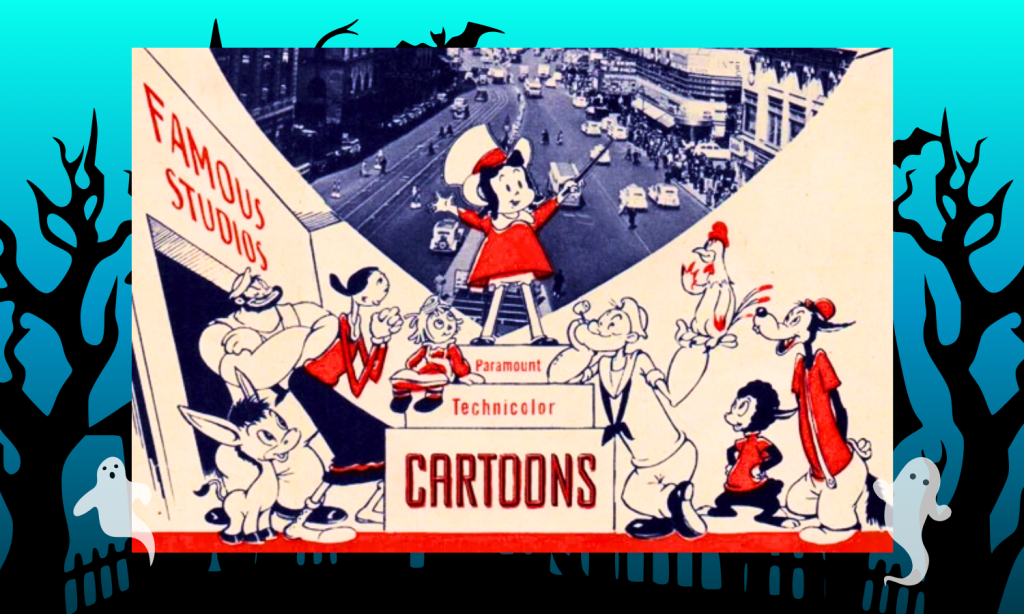
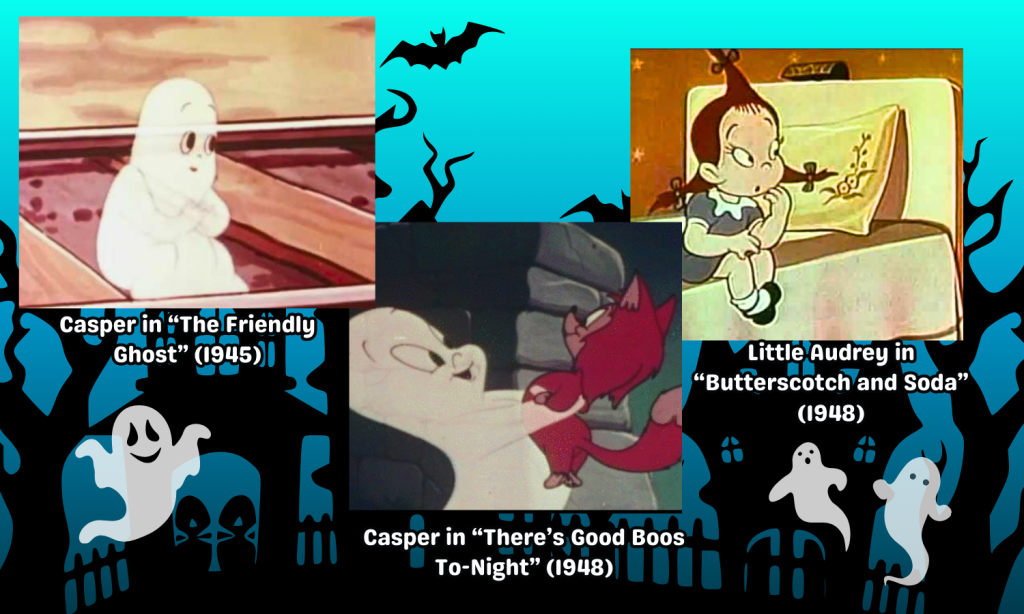
It wouldn’t take long, however, for Famous Studio to realize their cast of stars, one by one. In 1943, their first original stars, Blackie the Lamb and Wolfie Wolf co-starred in No Mutton fer Nuttin’, starting their trilogy in the Noveltoons series. In 1945, Famous Studios signed a licensing contract with Seymour Reit and Joe Oriolo, to adapt their unpublished children’s book about a child ghost named Casper searching for a friend. Although the book would never be published (and has since become lost media), the story has been adapted faithfully in The Friendly Ghost (1945), followed by two sequel shorts and the eventually selling of the character to Famous Studio for $200. This would be a bad deal on the creator’s side, as Casper the Friendly Ghost became the face of Famous Studios, starring in 55 additional shorts, his own spin-off series, and merchandising. In 1948, Famous Studio’s contract ended with Marjorie “Marge” Henderson Buell, and the animation studio needed another spunky, mischievous girl character for their shorts… so once again, they returned to the newspapers. Instead of going after another already-established franchise contract, Famous Studios focused on a particular character that had appeared in thousands of short stories across the United States- the fictious, catastrophic-prone, playful Little Audrey. Despite being used over and over again in the press, creating a wild folk tale like presence with her antics, Little Audrey hadn’t been depicted in artwork or animation. Little Audrey easily took Little Lulu’s place in the Famous Studios line-up.
Harvey Comics and Funny Animal Cartoons
The 1950s led to even more success with characters, although leaning more into funny animal dynamics, and the involvement of Harvey Comics. With the popularity of Casper and Little Audrey, Famous Studios was becoming closer to being a household name again, albeit with cheaper cartoons. The studio’s next endeavor would be to license the characters to a comic book publisher, primarily one that wanted to make comics for kids. In the 1950s, the comic book industry was rattled by the Comics Code of Authority, a censorship on the content, themes, and messages of comics, dependent on the age ranges each comic was appealing to. Although it was voluntary to appeal to the code, many readers and stores felt it was necessary for comics to follow the guidelines, especially for parents trying to get their children to read for fun. Harvey Comics, which had been in the comic book industry since 1941, and had a long list of previously licensed characters adapted into comics in their portfolio. The deal fell into place, and comic books adorned with Casper and Little Audrey were unavoidable at book shops and newspaper stands across the nation.

The icing on the cake? Talent Warren Kremer, one of Harvey Comic’s artists, whose distinct style helped shape Casper’s original ghastly appearance to a much softer and friendlier design, which only made the character more popular amongst audiences. He wasn’t as popular as Mickey Mouse, and certainly did not create as much of a cultural impact as Betty Boop or Popeye, but Casper the Friendly Ghost was a household name, cemented with a catchy theme song. As Harvey Comics and Famous Studios’ business relationship progressed, the animation produced by Famous Studios started to lean more heavily into the style of Harvey Comics’ depictions of the characters. It also helped that the Baby Boomer generation was the peak audience for Harvey Comics and the Famous Studios cartoons, aging perfectly with the cartoons, which had started to move, gradually, from the theatrical screen to the silver screen.
During the 1950s, Famous Studios also developed (or re-worked) a handful of original characters, which would be adapted by Harvey Comics after their respectful short film introductions. To combat with Metro-Goldwyn-Meyer’s popular Tom and Jerry series, Famous Studio paired up original characters Herman the Mouse and Katnip the Cat for equally violent cat-chasing-mice comedy. Unlike the Tom and Jerry cartoons from this period, Herman always beat Katnip in extreme ways and celebrates his victory at the conclusion of each episode. Baby Huey is a big, baby duckling, with his unusual size causing confusion, hilarity, and slapstick. Tommy Tortoise and Moe Hare, although not included in the Harvey Comics adaption treatment, banked off the success of Bugs Bunny and Cecil Turtle shorts, and played off the traditional straight man/funny man dynamic in comedy. All of the above, animal driven stories would fit comfortably with similar funny animal comics of the time, but usually given smaller roles, if any, in the comic books. In July 1958, Harvey Comics purchased the October 1950–March 1962 Famous Studios cartoons, including the full rights to the characters and shorts, excluding any Popeye shorts produced during the time. Harvey Comics would re-release the Famous Studio shorts using a Harveytoons logo in place of Noveltoons.


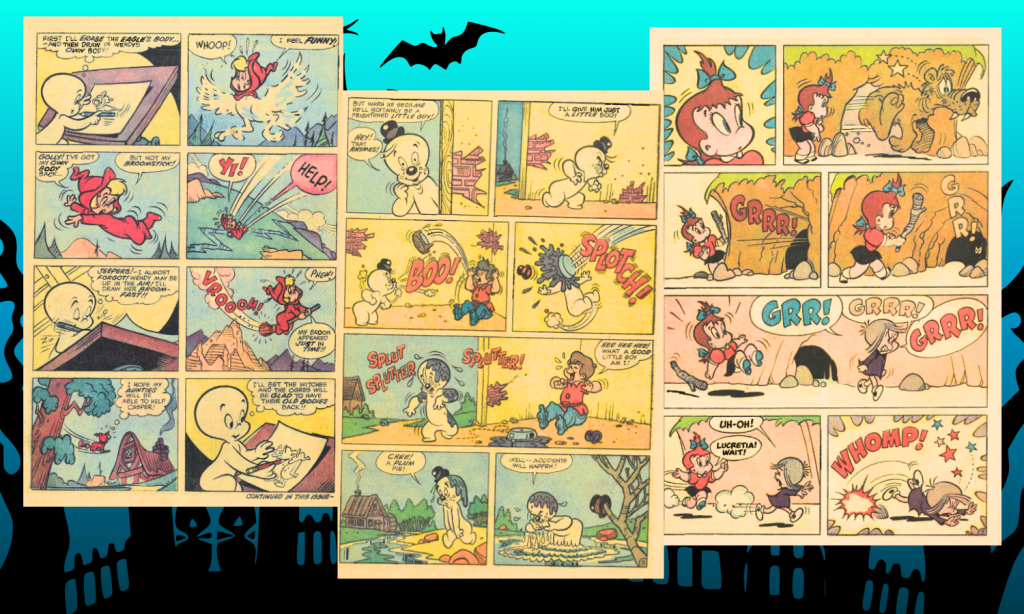
Harvey Comics would continue to produce comic books, animated series, and merchandise based on the characters from Famous Studios over the next two decades. Casper, Little Audrey, and Herman and Katnip would soon be joined by Harvey Comic original characters Wendy the Good Little Witch, Richie Rich, Spooky the Tuff Little Ghost, Hot Stuff the Little Devil, Little Dot, Little Lottie, and many others. Harvey Comics became synonymous with Harveytoons and all of the characters listed above, with many young readers- like myself- introduced to the comics long before the animated shorts.

Below are just a few scans of some of my favorite pages from a couple Harvey Comics in my personal collection.
Famous Studios Folds (Again), and The End of Harvey Comics
With all of Famous Studios’ most popular characters- Casper, Little Audrey, Little Lulu, Herman and Katnip- no longer accessible for cartoons, they struggled to come up with new characters that could appeal to children and compete with Harvey Films, instead falling back to their lesser known original characters and Popeye shorts. Unfortunately, once their biggest stars left Famous Studios, it was too late. Paramount Pictures once again shut the animation studio’s doors, re-opening as Paramount Cartoon Studios some time later. To cut costs even more, film would no longer be in Technicolor, but processed in two-tone color, creating a dull look.
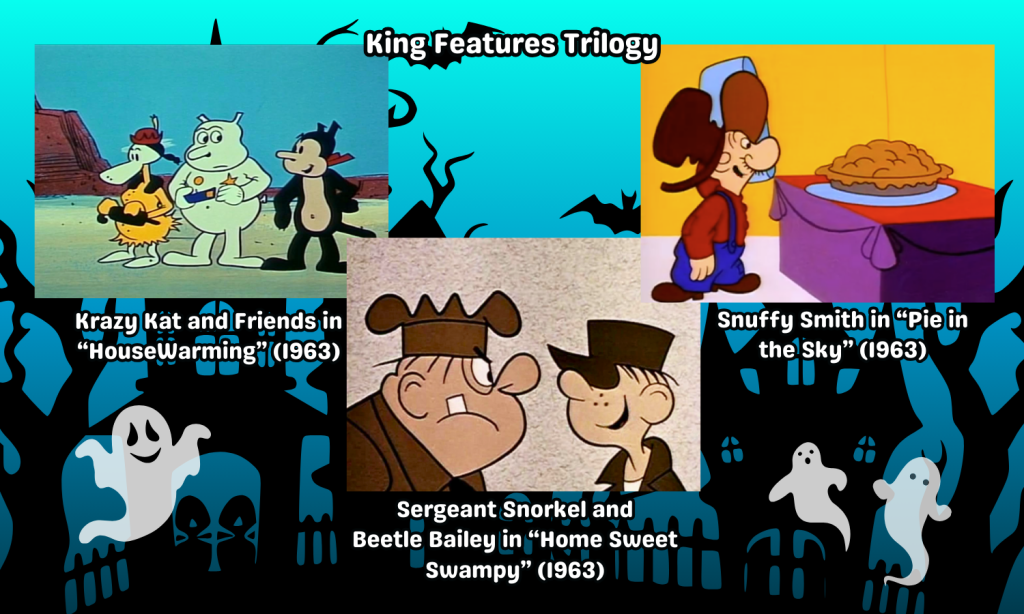
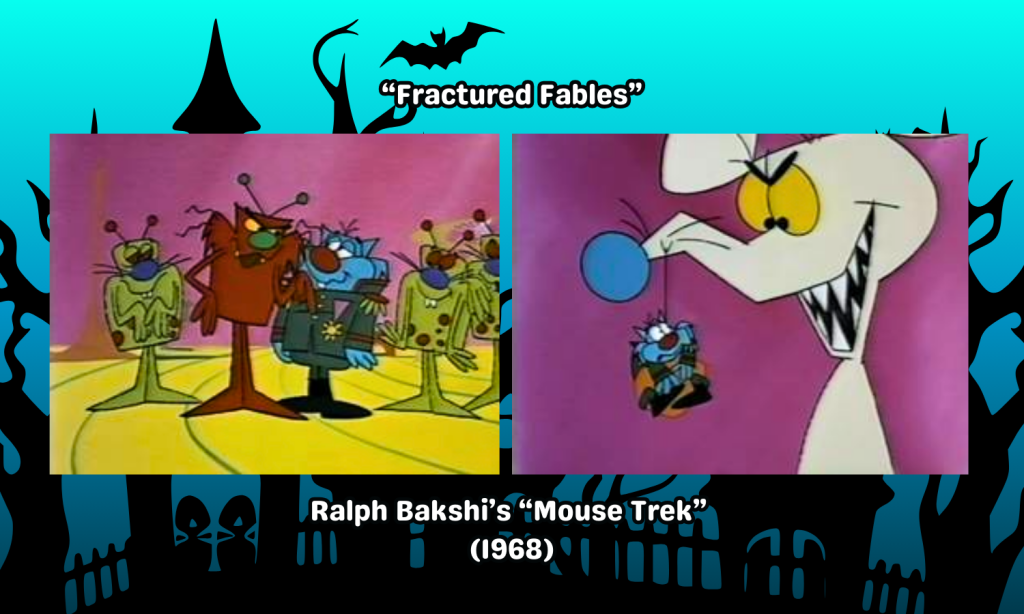
Paramount would continue to carry the copyrights to Popeye and the original theatrical Superman shorts, working closely with King Features on adapting more newspaper comic strips to animated shorts. Marge’s Little Lulu would make a short comeback with two shorts in 1961, adding to the line-up of other iconic newspaper comic strips like Krazy Kat, Beetle Bailey, and Snuffy Smith in the series King Features Trilogy TV cartoons. Like all of the other adaptions, Paramount Cartoon Studios animated each property in their pre-existing style, leaving little room for animators and artists to experiment. The director board at the studio- which had been around since the Fleischer Studios days- were starting to retire, or pass away, leaving major gaps. One of the up-and-coming animators, Ralph Bakshi, who had been working for fellow TV cartoon competitor TerryToons, filled a directorial position in mid-1967. After being hired, he started the shortest-run series of shorts, entitled Fractured Fables (not to be confused with Jay Ward’s animated series Fractured Fairy Tales with a similar premise, premiering from 1959 through 1964), which re-told typical fairy tales in silly and wacky ways. Fractured Fables would abruptly end with Bakshi’s Mouse Trek (1967), only producing six theatrical shorts. Paramount Cartoon Studios was closed down by Gulf+Western, Paramount Picture’s new owners, in late 1968.
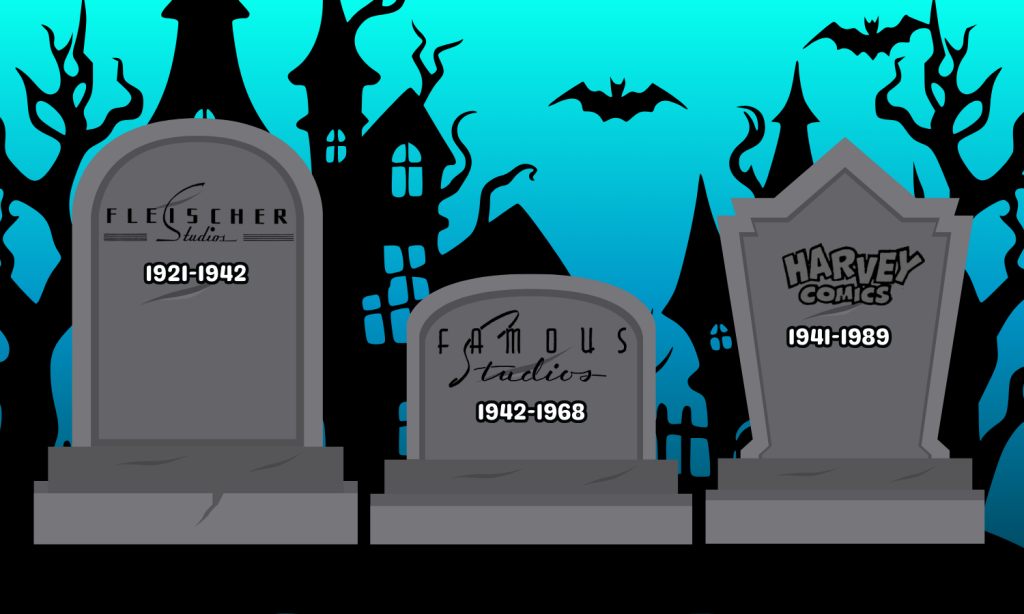
As for Harvey Comics, the other half of this defunct pair, their final days were dwindling. Although the cast of Harveytoons continued to entertain kids for the next two decades, through comic books, television shows, and specials, the comic book industry started to appeal more to young adult and adult audiences. Counterculture movements like the independent and small press Underground Comix scene gave the space for artists to express themselves and their opinions, and tell the stories they wanted to tell, without being forced to follow deadlines and rules set by big-name comic book publishers. Naturally, these comics, some named “comix” for their more mature content, became infamous within and outside of the industry. A switch started to happen in the early 1970s, with the animated adaption of F. Crumb’s Fritz the Cat (originally an underground comic) in 1972, and Marvel’s premiere of their own “underground” style character Howard the Duck in 1973. Mainstream comic book publishers needed to appeal to an older, edgier, and more rebellious audience- something Harvey Comics refused to do. (Check out Cat’s Picks! The Wacky World of Underground Comix for more information about this era of comic book history.) In the early 1980s, Marvel Comics reached out to a faltering Harvey Comics for a deal for the former to produce new content for the latter, but the deal fell through. Harvey Comics would cease production of its comics in 1982, taking a four year break, until Alan Harvey would take control of the company and start up production again.
Harvey Comics would not change their reputation as a kid-focused publisher, focusing now on limited titles, reprints of their popular issues, and thicker digests filled with a mix of new and old stories. In 1989, Harvey Comics was sold to Jeffrey Montgomery’s HMH Communications. Montgomery renamed Harvey Comics, combining all of it’s assets and libraries, to Harvey Comics Entertainment, re-releasing the original Famous Studio cartoons as “Casper & Friends” in 1990 and creating two animated series based on two of their popular characters- Baby Huey and Richie Rich. While the Harvey brand was controlled by Montgomery, fans of the original cartoons and comics were treated to live action adaptions of their favorite Harveytoons characters in theaters, Richie Rich in 1994 and Casper in 1995. The latter of which, whose titular character had been the face of Harvey Comics since 1945, put the friendly ghost back in the mainstream’s attention, with a live action movie and an influx of merchandise. MCA, Inc bought up 20% of shares, licensing the main cast of Harveytoons to appear in Universal Studios parks. Marvel Comic’s deal to publish Casper comics finally came to fruition, creating original Casper stories and adapting the movie into a limited-run series in 1996-1997.
Where are the ‘Toons, now?
However, in 1997, Montgomery would be fired from Harvey Comics Entertainment, and in 2001, it would be sold to Classic Media, with the Harvey-specific characters, comics, and filmography rebranded once again to Sunland Entertainment. If you’ve read Nostalgic Showcase Presents’ articles on Rankin/Bass Animation or FILMATION, you may recognize Classic Media, and it’s troubling history. Classic Media holds the filmography of pre-1974 Rankin/Bass library, Jay Ward Productions, FILMATION, and Harveytoons, which have all exchanged hands numerous times before Classic Media would be sold to Dreamworks Animation in 2012, which gave Universal Pictures full control over the aforementioned works. Other than a short-run series on Netflix, Harvey Girls Forever! (2018-2020), an animated adaption of the Harveytoons characters, set in the modern day, and merchandising, Universal Pictures has barely touched the franchise as a whole.
Unfortunately, as a result of ignoring this franchise over the past sixty-or-so years, Universal Pictures, MCA, and Harvey Films have neglected to renew some of the copyrights, with the shorts releasing to the Public Domain, leading to less favorable companies re-releasing the titles in unofficial DVD boxsets and VHS compilations, usually converted from damaged or lesser quality reels of film. Classic Films catalogue of other animation shorts and films had suffered similar fates before they were bought up, with the original reels of historically significant cartoons from that period becoming lost to time, discarded or destroyed, and digital copies made from copies were less than desirable. Numerous efforts have been made to find original reels, or the closest to original as possible, and restore the cartoons back to their former quality. Thunderbean Animation Shop2, one of few reputable distributors of Public Domain cartoons, commercials, and animated shorts, has tackled restoring and distributing some of the Noveltoons cartoons on Blu-Ray, releasing Volume 1 in 2023, and Volume 2 to be shipped out fall of this year (2024), in limited releases. Even though the animated shorts and characters have been overshadowed by other studios of the time, their impact on children’s entertainment lives on through present-day. I’ve listed some of my personal favorite Public Domain Noveltoons below, available to be viewed online.
I’ll be back in November for another dose of Nostalgic Showcase Presents – we hope you tune in!

Disclaimer: Some of the films created in this era may depict outdated and harmful stereotypes, messages and story lines.
Famous Studios and Harvey Comics Materials
Noveltoons Shorts:
Cheese Burglar (1946)
The Stupidstitious Cat (1947)
Much Ado About Mutton (1947)
There’s Good Boos To-Night (1948)
Quak-a-Doodle-Doo (1950)
Sky Scrappers (1957)
Crazytown (1959)
Cartoon Compilations:
The Spooktacular New Adventures of Casper Vol. 1
Hanna Barbera Christmas Classics Collection
Movies
Richie Rich- SearchOhio
Casper Meets Wendy – SearchOhio
Casper: A Spirited Beginning – SearchOhio
Footnotes
- Noveltoons, like most things associated with the Famous Studios brand, changed numerous times over the two decades of the series releases. However, to make this article less complicated and easier to read, I’ve decided to refer to Noveltoons as its original title. Certain musical episodes in the series would be called Kartune Musical Shorts, and Noveltoons would be renamed to Harveytoons after Harvey Comics bought the rights to the characters and shorts in 1959. Noveltoons and Harveytoons both started with the same (slightly redesigned for Harveytoons) jack-in-the-box mascot named Joker, before switching to a title card, opening credits, and dissolving to the short. ↩︎
- WPPL is not affiliated with Thunderbean Animation Shop, its owner(s), or its products. ↩︎
Sources
https://cartoonresearch.com/index.php/the-cult-of-noveltoons/
https://cartoonresearch.com/index.php/the-continuing-search-for-noveltoons-in-better-shape/
https://www.toonopedia.com/harvey.htm
https://www.mycomicshop.com/search?TID=337031
https://www.mycomicshop.com/search?minyr=1908&maxyr=1958&tid=196751
http://www.kleefeldoncomics.com/2022/04/the-snuff-smith-cartoon.html
On Animation Restoration and Preservation (written by Thunderbean for CartoonResearch):
https://cartoonresearch.com/index.php/the-year-ahead-in-cartoon-preservation/


