I read all the time when I was a kid, from a young age. Obvious reading materials aside (books, comics, magazines), I read, in complete childhood boredom, the backs of shampoo bottles, TV Guides, junk mail, and- for the catalyst of this article- novelty catalogues. These mail-in catalogues have since become a thing of the past, but back then, in the early 2000s, my dad had a subscription to “Johnson Smith’s Things You Never Knew Existed”, a catalogue that sold exactly what it promised. From shirts with sarcastic humor, a multitude of different gag gifts, and life sized sculptures of Freddy Krueger, you could order practically anything! I had no idea what most of the stuff was, or who Freddy Krueger was, but I knew the catalogues weren’t something I would be allowed to read. So naturally, I read more. My dad and I would trade these catalogues, dog-earing the pages with merchandise that we wanted the other person to see, and imagining the type of people who might afford to (or want to) own everything it offered. These catalogues introduced me to edgy, sardonic, and dark humor, but also to horror merchandising. No franchise was more prevalent in that era than The Nightmare on Elm Street– a gruesome, slasher classic about a murderous nightmare demon terrorizing teenagers in their sleep, produced by New Line Cinema. Cuddled up in bed, dear reader? Good. Let me tell you the tale of the defunct studio that brought some of our favorite franchises to life…
Foreign/Indie Films and the Rise of Krueger
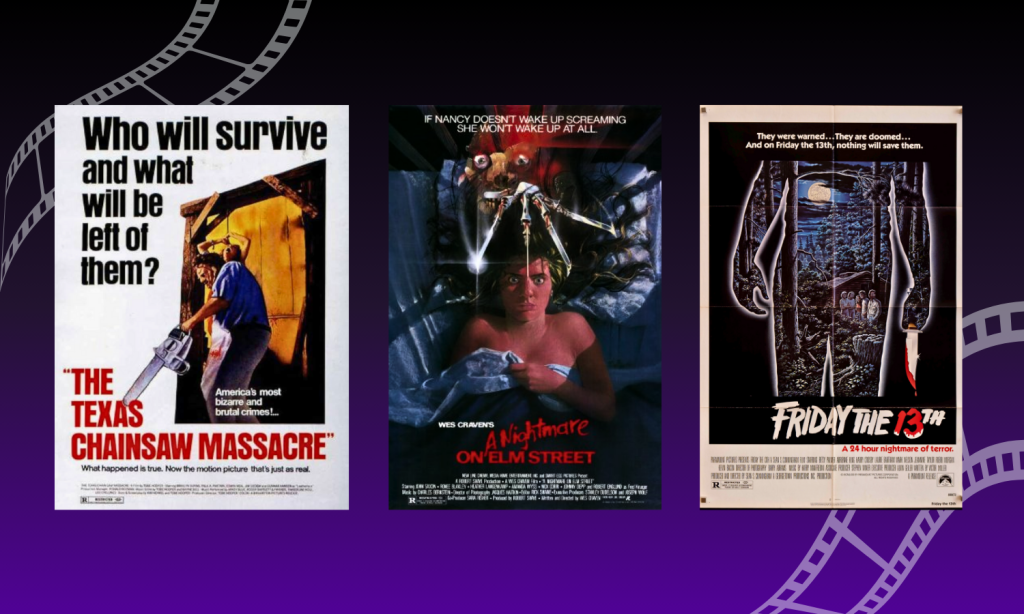
1967. Foreign and art films are hitting the international market, and hoping to make bank in the USA, Robert Shaye establishes “New Line Cinema”. The new distribution company, then based in New York City, would go on to distribute a handful of films; notably, Stay As You Are, and Get Out Your Handkerchiefs (which would win an Academy Award for Best Foreign Language Film in 1978). In the mid-70s, New Line would start to produce their own films, but focused primarily on distributing or co-producing films. When The Texas Chain Saw Massacre (1974)’s original distribution company lost the rights to the film, New Line Cinema made a deal with the original producers, and re-released the grisly film to theaters in 1983, and would continue to re-release the film annually around Halloween. This was New Line Cinema’s first horror film deal, and it opened up the studio to producing and distributing more slashers in the next three decades.
Real success would strike the production company in 1984 with the release of Wes Craven’s iconic A Nightmare on Elm Street. Produced on a budget of $1.8 million, this B-movie slasher made up its budget in just two days, and would go on to produce an impressively scary $25.5 million at the box office. The main villain, the murderous and chilling Freddy Krueger played by Robert Englund, has become an icon of slasher films. Even if you hadn’t seen the original movie when it released, his image was parodied in all sorts of media, merchandising was heavily produced and sold in novelty and costume shops, and you definitely heard Freddy’s haunting poem. A Nightmare on Elm Street did to a good night sleep what Jaws did to the open ocean- terrify viewers of the unknown horrors hidden just below the surface. What do you do when a movie becomes wildly marketable and popular? You make it a series! With every addition of A Nightmare on Elm Street, New Line Cinema broke their previous profit records by millions. Later additions to the series included a crossover with another New Line Cinema created slasher (who made his premiere in 1993’s Friday the 13th), Jason Voorhees.
From the profits produced from the Nightmare on Elm Street and Friday the 13th series, New Line Cinema expanded their production studio, with an international distribution arm, a department (and later, fully established studio) dedicated to distributing independent and foreign films, and selling their catalogue of films to broadcast syndication and pay-TV. This would help push more of New Line Cinema’s lesser known films to a wider audience, helping to make the production company a household name. Instead of competing against already established studios like Warner Bros, Disney, or 20th Century/Fox, New Line Cinema quickly filled the role as one of the leading b-movie studios/distributors of the 1990s-2000s.
A Couple of Turtles and a Ring
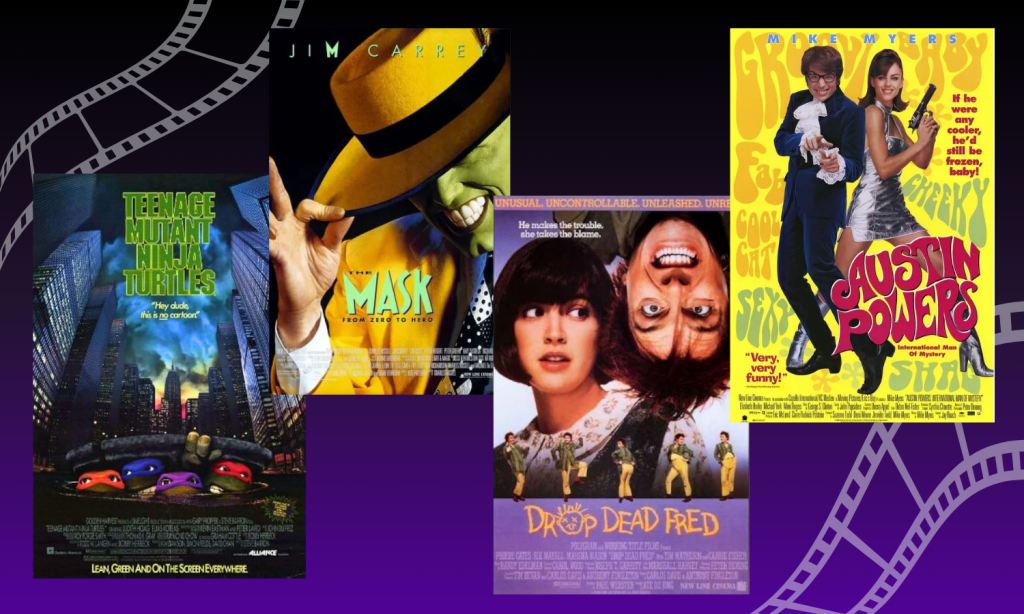
Their next big hits would come with the gnarly comic-to-film trilogy, Teenage Mutant Ninja Turtles (1990-1993). With full body puppets made by the Jim Henson Company, TMNT is one of the more visually unique adaptions of the characters created by Kevin Eastman and Peter Laird in 1984. This film series would be New Line Cinema’s first, but certainly not last, endeavor into adapting edgy and independent comics to full feature films. Their next adaption would headline a then-new timer Jim Carrey as the cartoon-loving Stanley Ipkiss whose misfortune with a magical mask turned him into a plasticine trickster with as much wacky humor as a Tex Avery cartoon, in 1994’s The Mask. New Line Cinema would continue to produce a mix of thrillers and comedies, intertwining releases with their slasher film series. Standalone movies and series like Dumb and Dumber, Austin Powers, Critters, Drop Dead Fred, and others produced by New Line Cinema during the 1990s all have a similar creative, independent, cult classic feel across audiences while still having big budgets. Not all was good for New Line Cinema during the 1990s, and with every blockbuster release came a handful of forgettable box office flops, which barely made even. In 1994, New Line Cinema was acquired by the Turner Broadcasting System, merging with Time Warner Entertainment two years later- and was kept a separate entity, continuing to produce films in their own studios. This merger would help New Line Cinema, as the budgets raised steadily through the 1990s and Time Warner Entertainment could help find the right producers to finance projects.
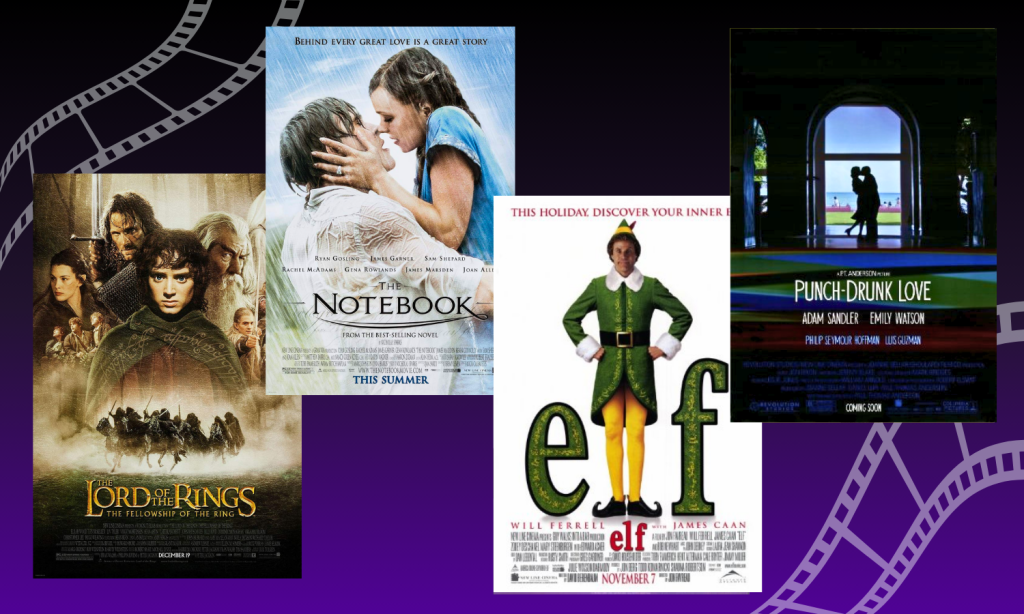
In the 2000s, audiences wanted to see fantasy on the big screen, and with the rise of Computer Generated Animation for special effects, this genre of film exploded. New Line Cinema would co-produce one of the best received adaptions of J.R.R. Tolkien’s The Lord of the Rings franchise. Using a mix of CGI and practical effects, the first movie in this soon-to-be trilogy, The Fellowship of the Ring would be released in December of 2001 and absolutely blew audiences away. This movie would be New Line Cinema’s second film to be placed in the National Film Registry; with the first being A Nightmare on Elm Street released nearly twenty years prior. In 2003, instant modern holiday classic ELF would be distributed by New Line Cinema, their first and only holiday film. A handful of solo thrillers like the Final Destination series (2000-2025); more additions to their Nightmare on Elm Street series; the second and third highly acclaimed Lord of the Ring movies; some high-speed action flicks like the Rush Hour series (1999-2007), and rom-com classics like Punch-Drunk Love (2003), The Notebook (2004), and Wedding Crashers (2005). In the early 2000s, New Line Cinema was thriving, coasting on the successes of their series and standalone films, appealing to a much wider audience- but mainly to a young adult demographic. So, what happened to the studio?
The Recession and The Golden Compass
In the second half of the 2000s, New Line Cinema started to produce film productions based on children’s books. They had produced film adaptions of various independent comics since the 1990s- with the TMNT series (1990-1993, The Mask (1994) and its sequel Son of the Mask (2005), Spawn (1997), and the Blade trilogy (1998-2004) becoming notable adaptions. With the magnitude of the financial and cultural success of the Lord of the Ring series, it made sense to enter into the industry of producing adaptions of modern children’s books. For kids of the 2000s, these films might have been the first time we went to a theater with our family for a life action film, and they are certainly time capsules into the fashion, culture, and slang of the era. The Little Vampire (2000), Hoot (2006), How to Eat Fried Worms (2006), The Last Mimzy (2007), and finally… The Golden Compass (2007). If It’s a Wonderful Life (1946) can be contributed to Liberty Films’ downfall, The Golden Compass decimated New Line Cinema’s production studio. Produced with a budget of $180 million, The Golden Compass made a measly $372 million globally, severely under Time Warner Entertainment’s estimates. The market had become far too saturated with similar fantasy adaptations – Warner Bros’ Harry Potter series (2001-2011), Disney’s Chronicles of Narnia trilogy (2005-2010), and 20th Century’s The Night at the Museum series (2006-2014) were all competing for family audiences who wanted to watch blockbuster action adventure/fantasy movies. Less than a year later, the 2008 Housing Crisis (now referred to as The Great Recession), struck. Everyone felt the financial strain during this period, and less families could afford to go to theaters, or theme parks, or make plans for big excursions or vacations. In 2008, Time Warner Entertainment took full control over New Line Cinema and its different distribution arms, still using the branding for films and series that fit New Line Cinema’s catalogue. During the 2010s and into modern day, majority of New Line Cinema’s films were only co-produced by the studio, with Warner Bros taking over distribution. With more control over the financial budget and films greenlit, the movies lost their independent style and charm. On paper, New Line Cinema may still exist, but it is far from the powerhouse of a production/distribution company that it was from the 1980s through the 2000s.

Last Notes
Of all the articles I’ve had to write for this series, this has been one of the hardest. Due to nature of this production company, and when it went defunct (roughly seventeen years ago), information is readily available online, and there isn’t any secrets to be revealed. Of all the previous subjects in this series, New Line Cinema is also the cleanest- ironic, being that one of their biggest and most popular film series are slashers. There doesn’t seem to be any skeletons in this production company’s metaphorical closet. Instead, New Line Cinema’s failure was the film market. In the early 2010s, movies just could not pull in the same numbers as the 1990s did. Our relationship with theatrical releases changed, and we all felt the financial affects of the 2008 Housing Crisis. Netflix’s mail-in DVD service had been around since 1998, and brick-and-mortar video rental stores like Blockbuster and Family Home Video were almost as plentiful as McDonald’s and it was plainly cheaper to rent a movie than a visit to your local mall theater. The concept of streaming movies directly to your TV wasn’t too far-fetched, with video on-demand movies available through different cable services for an one-time fee.
Instead, the issues I had with writing this article stemmed with my own personal nostalgia attached to this era, and all the sadness that comes with reminiscing about an part of my childhood that I can never return to. I didn’t grow up with the Freddy Krueger series, Austin Powers trilogy, Teenage Mutant Ninja Turtles trilogy, or The Lord of the Rings – but I knew about them, talking with friends or catching a trailer, seeing ads for merchandise in novelty catalogues, or hearing people impersonate or quote different characters while trying to cram for a test while on the school bus to elementary school. It took me until much later in my life to sit down and watch most of New Line Cinema’s biggest films, cringing at the terrible, low budget special effects and falling in love with some of the so-bad-its-good comedies from the 1990s. But my personal nostalgia for that bygone era hangs on, wistfully and foolishly wishing to return. Maybe these films can provide just a moment of escapism and entertainment from an earlier time, far from a modern world full of so many unknowns and negativity.
Check back next month for another entry into the Nostalgic Showcase Presents series!

Sources
New Line Cinema: Tracing The History Of The House That Freddy Built