What is Pastel?
No, not the pale color schemes you see in the spring! Pastels, the art medium, are similar to chalk. Pigmented powder and a touch of a binding agent are pressed into sticks. The binding agent affects the line quality. Regular pastels are dusty, while oil pastels act more like a very soft crayon. When working with pastels, it helps to use paper with more “tooth,” which means that the surface has more texture to anchor the loose pigment.
Visual Characteristics
Pastels are excellent for blending. An artist can use their finger, or tools called tortillons and blending stumps. You can recognize pastel art by its rich colors, as well as layered or blended areas. The paper texture is sometimes also visible. The softness of pastel makes fine details difficult.
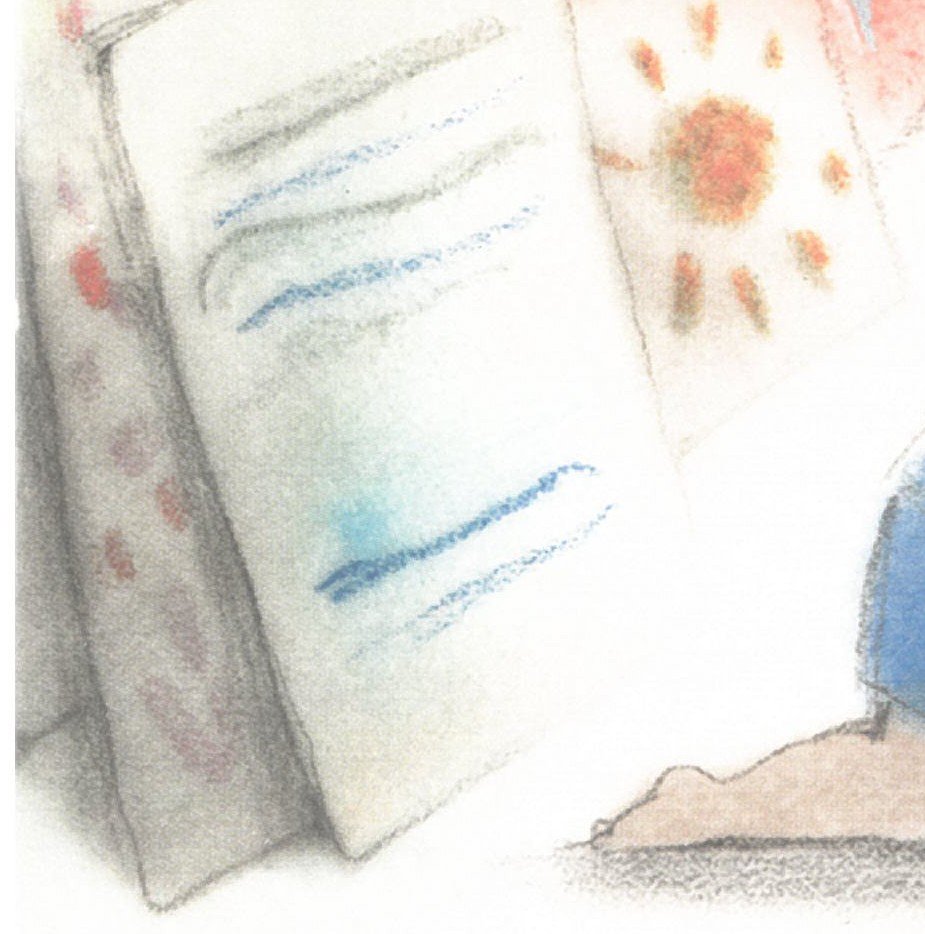
On the right is a detail from Dadaji’s Paintbrush, illustrated by Ruchi Mhasane. This is a good example of the delicacy of pastels. Line work is possible, as seen in the blue lines, but you can also see how one line has been lightly touched, and the blue pigment has been spread upward. Gray has also been added, to create an artful shadow. Blended pastels have a lovely “feathering” edge, rather than a hard stopping point.
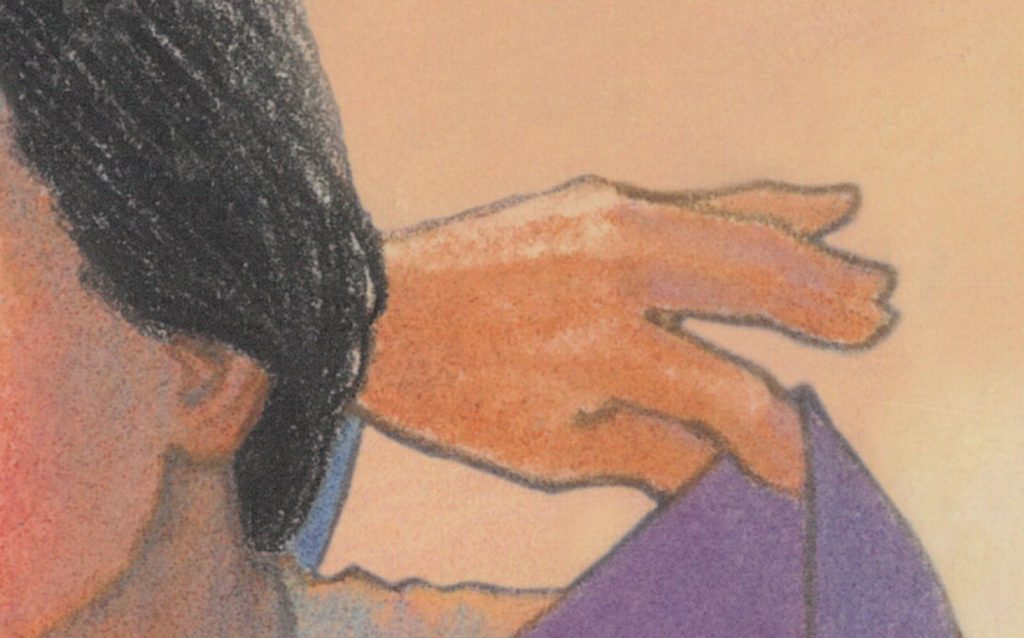
Below is a detail from The Best Eid Ever, illustrated by Laura Jacobsen. This illustration was made with pastel pencils. Can you see how multiple colors have been layered and blended in the skin tones? Take a look at the visible texture in the black hair. Now look at the areas just inside the black outline of the hand, and the purple area. Can you see slightly lighter areas where the paper shows through? This is because it is difficult to make a clean hard edge with pastels. If pastels were summed up in one word, it would be “soft.”
Frequent Pairings
Many artists use colored pencils with pastels. They both tend to have visible texture, but colored pencils are firmer and more useful for fine lines and details. Traditional pastel colors and textures can also be incorporated into digital art, which makes a naturally messy medium much easier to work with.
Read More


Pictured above:
All that grows, Wong
Dadaji’s paintbrush, Sirdeshpande
Happy, Hout
Wherever you’ll be, Guttman
One grumpy day, Butler
My Little Golden Book about Johnny Appleseed, Houran
Fletcher and the springtime blossoms, Rawlinson
The best Eid ever, Mobin-Uddin
The night I followed the dog, Laden