
When I’m not sitting at a desk or writing up booklists for the blogs, I have the pleasure of working as the library’s Horror Hostess, sharing classic movies once a month at the Horror Film Club’s meetings. For those of you who are curious, we watch tales of terror from the 1920s-1960s, dabbling in the classics and some of the more obscure chillers from the dark reaches of the past.
A few months ago, I started sharing a book list of horror books that inspired some of the films we had watched together. While that list included titles that were not in our collection (but could be obtained through SearchOhio or even Project Gutenberg), for our purposes today I’ll only be working with titles were the book and the movie are both in the library’s collection. AND I’ll be including some titles that the Horror Film Club may or may not have seen yet. I hope you find something to chill you to the bone!

Frankenstein (Mary Shelley)
Inspired: Frankenstein (1931)
It’s a classic tale of murder, obsession, and an attempt at playing God. Young Victor Frankenstein attempts to discover the secret of life by creating a monster out of dead body parts. He succeeds in bringing the creature to life, but instead of the triumphant success he was hoping for, he finds himself filled with loathing for the creature he has created. Rejected by its creator and by society at large, the “monster” wanders the world, seeking its creator and its chance at revenge.
This book inspired so many Frankenstein stories and movies, but none comes close (in my opinion) to the Karloff classic from 1931!
Dracula (Bram Stoker)
Inspired: Nosferatu (1922), Dracula (1931)
Told entirely through journal entries, letters, newspaper articles, and voice recordings, Dracula is a classic tale of unspeakable evil. Jonathan Harker believes that he has been given an excellent career opportunity when he’s sent to Transylvania to bring some real estate paperwork for a local nobleman to sign (he’s purchasing a piece of property in London). But, the adventure soon takes a dark turn when Harker learns that his host, Count Dracula, is not quite all that he seems. By the time he discovers the truth (Dracula is a vampire, he drinks the blood of the living in order to keep himself alive, and he intends to bring his thirst for blood to England), its too late, and Jonathan is locked in the castle to become a meal for Dracula’s wicked brides. Meanwhile, others in England start to document the strange goings-on after the Count arrives in England, little realizing the extent of the horror that has come to them.
The Strange Case of Dr. Jekyll and Mr. Hyde (Robert Louis Stevenson)
Inspired: Dr. Jekyll and Mr. Hyde (1920), Dr. Jekyll and Mr. Hyde (1931), Dr. Jekyll and Mr. Hyde (1941)
London lawyer Gabriel Utterson becomes increasingly obsessed with a strange, grotesque man named Edward Hyde. Hyde is known for bouts of extreme violence and Utterson believes that he is blackmailing his good friend, Dr. Henry Jekyll. Why else would Hyde be known to disappear into Jekyll’s laboratory? After all, Jekyll is one of the kindest, most level-headed men Utterson knows, and certainly not the sort of person who would associate with a monster like Hyde unless he absolutely had to. What he doesn’t realize is that Jekyll and Hyde are one in the same, and the good doctor has been using potions to transform himself into the villainous Hyde. At first, it was thrilling to do whatever he wanted without consequences, but soon Jekyll finds himself transforming even without the aid of the potion. As he loses control of himself, slipping more and more frequently into Hyde, it becomes a race against time before Jekyll himself is completely lost.
Jaws (Peter Benchley)
Inspired: Jaws (1975)
The seaside resort town of Amity is under attack from a great white shark! While the police want to close the beach to protect vacationers from being eaten, they are overruled by the mayor, who worries that scaring people with stories of killer sharks (or worse, restricting all-important beach access) will cause lasting damage to the town’s bustling tourist trade and the incident is kept quiet. As the attacks continue, police chief Brody, consumed with guilt, joins forces with Hooper, a young ichthyologist, and Quint, a grizzled sea captain, to track down the monster and destroy it.
This film is a little too new to be something we’d watch at the Horror Film Club, but it’s a classic nevertheless and I definitely wanted to include it on this list!
I Am Legend (Richard Matheson)
Inspired: The Last Man on Earth (1964)
The year is 1976, and the world has been damaged beyond repair thanks to an apocalyptic war. Next came the pandemic, which eliminated the rest of the population and turned the dead into reanimated vampires that hold a deadly aversion to sunlight. Robert Neville is the only survivor. By day, he travels around the areas close to his home (moving in increasingly wider circles) to find and destroy the once-human monsters while they sleep. By night, he returns to his barricaded house to hide while the undead attack, desperately trying to consume him. But, after three years of isolation, Neville discovers a terrified young woman out during the day. As he gains her trust (and she his) he begins to think that perhaps things could be different. But, is it possible there are other survivors?
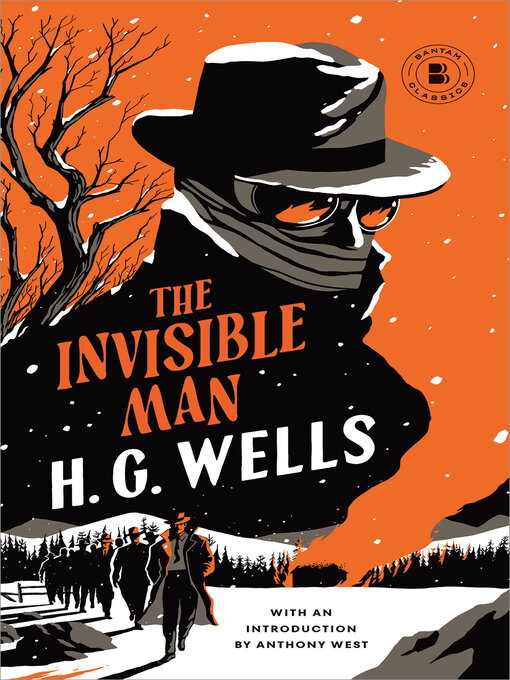
The Invisible Man (H.G. Wells)
Inspired: The Invisible Man (1933)
Dr. Griffin managed to do the impossible and created a serum that can make anyone completely invisible. However, there are a few unforeseen circumstances. For starters, he is unsure of how to make himself visible again. But, perhaps more disturbingly, a side-effect of the formula causes him to start losing his mind, becoming more and more violent with each passing day. Will he be able to turn himself back before he completely loses his humanity? And as for the authorities, how is it possible to capture a madman that you can’t even see?
This little book is a quick, biting read, and the movie that it inspires (with Claude Rains) is an absolute classic that spawned a series of excellent sequels!

The Stories and Poems of Edgar Allan Poe (Edgar Allan Poe)
Inspired: Murders in the Rue Morgue (1932), The Black Cat (1934), The Raven (1935)
Edgar Allan Poe wrote nearly 70 short stories and nearly 50 poems. And quite a few of those have been made into movies. But today, let’s focus on three of them. First up, we have Murders in the Rue Morgue, an early piece of detective fiction that features a mysterious and brutal murder. In The Black Cat, a man becomes menaced and tormented by the family pet. And finally, in The Raven, a man is mourning his dead love when a bird shows up at his window. At last! A friend! But, as with anything related to Poe, madness soon follows. The movies that were inspired by these stories deviated quite drastically from their source material, but are still a lot of fun, nevertheless!
The Sire de Maletroit’s Door (Robert Louis Stevenson)
Inspired: The Strange Door (1951)
While attempting to escape from the English soldiers patrolling the area, Denis de Beaulieu, a young nobleman, becomes the unintended guest (and then prisoner) of the mad Sire de Maletroit, who intends him to marry his young niece, after she “disgraced the family”. Faced with a choice of forced-marriage or death, Denis must decide what path he intends to take.
The Sire de Maletroit’s Door is only a short story, so it should come as no surprise that the movie had to make some big changes (and add a few things) in order to get to a 81 minute runtime. Still, this creepy chiller with Charles Laughton is well-worth a watch, regardless of the changes to the story!
The Phantom of the Opera (Gaston Leroux)
Inspired: The Phantom of the Opera (1925)
For as long as its been open, there have been rumors that the Palais Garnier was haunted. A real phantom roamed the dark corners and deep cellars. He extorted money from the two men who managed the opera. And under the guise of an Angel of Music, he taught a young performer how to sing. But, there was more to the story, of course. There was no angel, no true phantom–only a deeply disturbed and disfigured recluse living in the depths, falling deeper into madness and obsession until he finally decided to bring the love of his life into the depths with him–with horrifying consequences.
In addition to spawning many different films, this book was also the inspiration for the extremely popular Broadway musical!
The Island of Dr. Moreau (H.G. Wells)
Inspired: The Island of Lost Souls (1932)
Edward Prendick is saved not once, but twice by a mysterious man named Montgomery–first when he’s shipwrecked and again when the ship’s captain attempts to leave him stranded in the middle of the ocean. But, he has no idea the horrors that await him when they arrive at Montgomery’s island home. His savior’s employer, Dr. Moreau, is a scientist who performs gruesome experiments on live animals in order to turn them into humans. Convinced that Dr. Moreau might turn to experimenting on humans next, Prendick desperately tries to find a means of escaping the island before it’s too late. Not for the faint of heart, The Island of Dr. Moreau is short, brutal, and bloody.
The Birds (Daphne Du Maurier)
Inspired: The Birds (1963)
This story is perhaps one of the most chilling on our list because it could possibly happen. It’s not likely that many of us are going to be seduced by a masked ghost in an opera house basement or become a prisoner of a mad scientist on his secret tropical island. But, birds? Yeah, we all have birds in our yards. We see them on our commute. If I look out my office window, I can see tons of birds just on the other side of the glass. And of course, they’re docile. They tend to be shy. But, you never quite know. And that’s what makes this short story so terrifying, as birds of all sizes and species suddenly start attacking people. What is the reason for the sudden violence? You’ll have to read it and find out!
Twice Told Tales (Nathaniel Hawthorne)
Inspired: Twice Told Tales (1963)
Twice Told Tales the movie is a weird little collection of three short horror-story-segments stitched together into one film. The book, however, consists of a series of short stories originally published in two volumes that feature all manner of short stories–some scary, some not. Ironically, the movie that takes its name from this book only contained one story from the collection Twice Told Tales. The three segments are Dr. Heidegger’s Experiment (which comes from this book), Rappaccini’s Daughter, and The House of the Seven Gables. You can check out each of those in our library collection as well.
The Picture of Dorian Gray (Oscar Wilde)
Inspired: The Picture of Dorian Gray (1945)
Dorian Gray is young and beautiful. And his good friend, Basil, wants to paint a picture of him. Everything goes smoothly, the picture is beautiful, but something is still wrong. As Dorian looks at the picture, he laments that one day he will grow old, develop wrinkles, and eventually die…but the picture will always be young and youthful and handsome. So, he makes a secret wish–that he could stay young forever and that the painting could grow old. And in fact, it happens. Dorian ceases to age, but the picture does. And every time Dorian commits some sort of sin, his angelic features are never marred by the ugliness of what he has done. Every sneer, every drop of blood, shows up on the picture instead of on him. And Dorian soon descends into a life of decadence and crime.


