
The first time I saw Disney’s Return to Oz (1985), I was expecting the same fantastical, magical, wonderful escapism from the MGM classic, or something akin to Warner Bros The Neverending Story (1984), one of my favorite films growing up. Instead, Return to Oz is a fever nightmare, teetering on the edge between twisted childhood delights and outright horror. Even as an adult viewer, the themes of the movie are just bizarre. Within the first twenty-or-so minutes, we’re re-introduced to Dorothy, after the events of the original Wizard of Oz film, still living in Kansas with her Auntie Em and Uncle Henry, and Toto too. Dorothy is desperately trying to convince her family that Oz is real, and that she really did befriend a talking Tin Man, Lion and Scarecrow, kill a wicked witch, and that the land of Oz desperately needs her. Suspicious, Aunt Em and Uncle Henry make the decision to… commit poor Dorothy to a psychiatric asylum. Her family, and the doctors at the facility decide that these delusions must be caused by schizophrenia and that she must go through extensive shock therapy to treat it out of her system. While at the asylum, Dorothy befriends another patient, and they escape together at night during a thunderstorm, the facility going up in flames and Dorothy and her new friend sliding down a muddy hill into a flooding ravine. Then, the real adventures start, and Dorothy transports back to the land of Oz, which has been taken over by a dark overlord.
I was shocked. Where did the whimsy go? This is a Disney movie made for and marketed towards children, yet their main lead is essentially downplayed and gaslit by the rest of the supporting cast, forced to go through shock treatment. We, as the audience, had a preconceived notion of what Dorothy experienced in her adventures in Oz, and we’ve been rooting for her since 1939 (or earlier, with the L. Frank Baum books), and it’s our suspension of disbelief that points towards Dorothy’s innocence. Instead, Return to Oz is a grim reminder of reality and how psychology was treated in 1930’s rural America.
Check out Return to Oz at WPPL
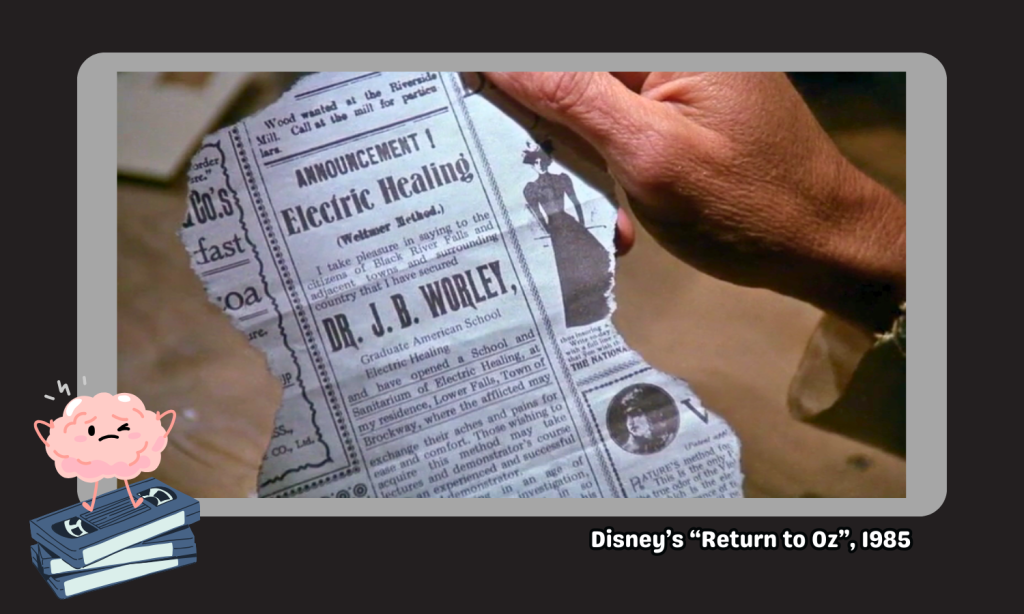
While I watched Return to Oz, during the height of the pandemic and lockdown in 2020, it led me to think about other films with questionable mental health representation. The world of filmmaking and portrayals of mental health must’ve changed between 1985 to now, surely… For the rest of this article, I picked out two of the best and worst representations of mental disorders on film and TV!
Benny & Joon (1993)
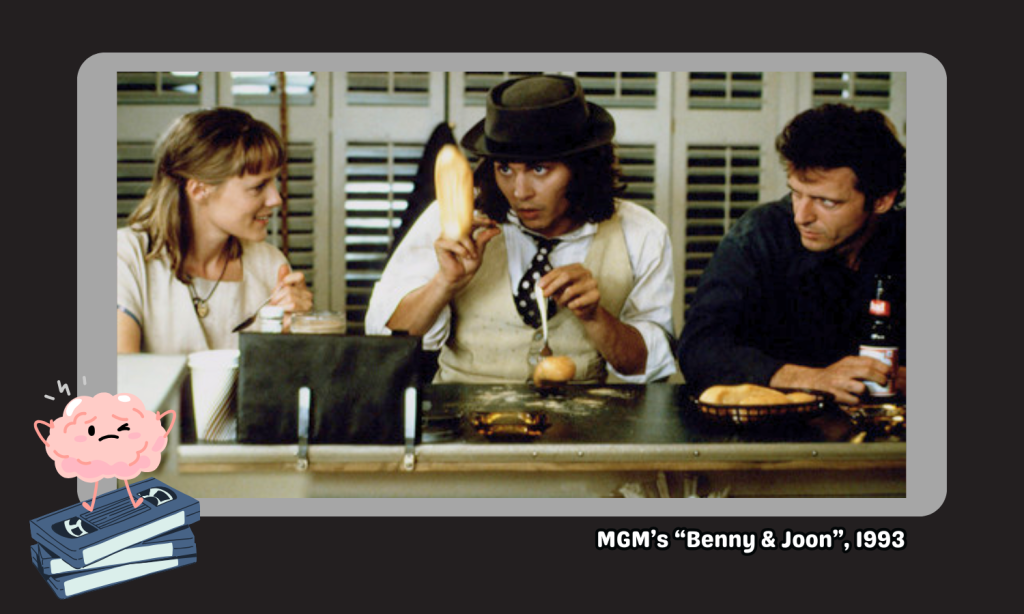
Benny & Joon is one of those movies that I’ve watched numerous times over and I honestly can’t get sick of it. The movie centers around artistic and spirited Joon, a young adult with an unnamed mental illness, who depends on Benny, her older brother, for her everyday care. Joon takes medication for her condition, has outbursts of intense emotion, depressive episodes, becomes nonverbal after conflict, and impulsive, setting pieces of paper on fire. When questioned why Joon would do this, she coldly states that the voices told her to; leaving the audience to assume that Joon might have a schizoaffective disorder. A new neighbor, Sam, is nearly as eccentric as Joon. Audiences can perceive Sam as neurotypical or on the Autism Spectrum, for having specific mannerisms, lack of social cue recognition, and constantly mimicking his favorite actors- silent film stars Buster Keaton and Charlie Chaplin. Sam also can’t read, despite being a young adult, which could also cue towards dyslexia or another learning disorder. Joon slowly warms up to Sam and his silly behaviors, teaches him to read, and the pair become intimate, creating space for Benny to become more independent without feeling the need to be a constant caregiver to Joon. While this selection isn’t perfect, Benny & Joon shines as one of the better mental health representations from the early 1990s, and the hardships that the three main characters deal with on a daily basis while attempting to live and support each other in a world not built for neurodivergence.
Check out Benny & Joon on SearchOhio
Split (2016)
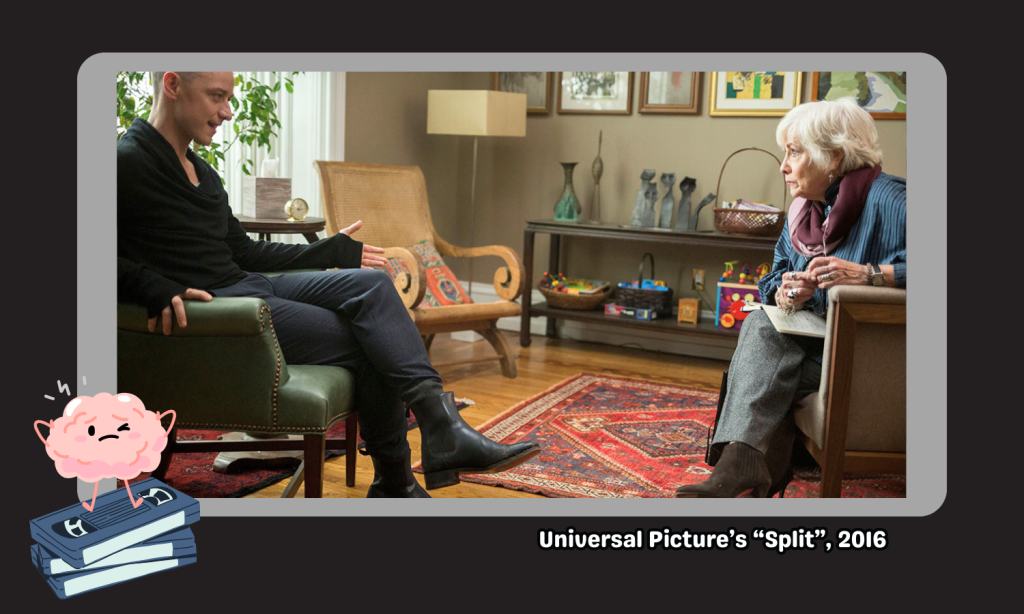
In the world of psychological thrillers and horror films, the concept of split personalities is not a new one. Robert Louis Stevenson’s The Strange Case of Dr. Jekyll and Mr. Hyde (1889) explores the question of the duality of man, whether or not our evils can be expunged from the good, and if our psyche can be split in two. While this story is written as a horror, with the evil Mr. Hyde taking complete control of the body and doing horrendous things to innocent bystanders, the idea of one person having multiple personalities living in their mind is not completely science fiction. Dissociative Identity Disorder (DID), which used to be called Multiple Personality Disorder, is one of the least understood and most villainized mental disorders depicted in media. In real life, this disorder forms as a direct cause of a particularly traumatic adolescence, during which the different identities of a child does not has the time and emotional support to form together, with each identity becoming an unique part of the host body’s life with different roles, tools, and personalities. Those with DID are severely misunderstood, and are often misdiagnosed, but it’s important to note that the other identities are meant to protect the host and help the individual with their daily activities and live a functional life. Split is one of the more recent examples of DID being severely misrepresented in media, and it’s main character- a man named Kevin- falls deeply into the villain troupe of those with the disorder. Kevin is shown attending and participating in therapy, his different identities controlling the body and the “switches” between identities, triggers and traumatic flashbacks, dissociation, and other DID-related symptoms. However, his more “evil identities” lean more into Mr. Hyde depictions- with one kidnapping teenage girls, threatening them, and emotionally tormenting them, and one particularly animalistic personality snarling, crawling on the walls and able to withstand bullets. For a fictional horror movie, the concept that anyone out there could be hiding a murderous side is appealing, but for Split, Kevin’s diagnosis of DID is the cause of the monster. It’s just too close of an association, for a diagnosis that is already severely misrepresented and villainized in media, and generally misunderstood in the mental health world.
Check out Split at WPPL
Crazy Ex-Girlfriend (2015-2019)
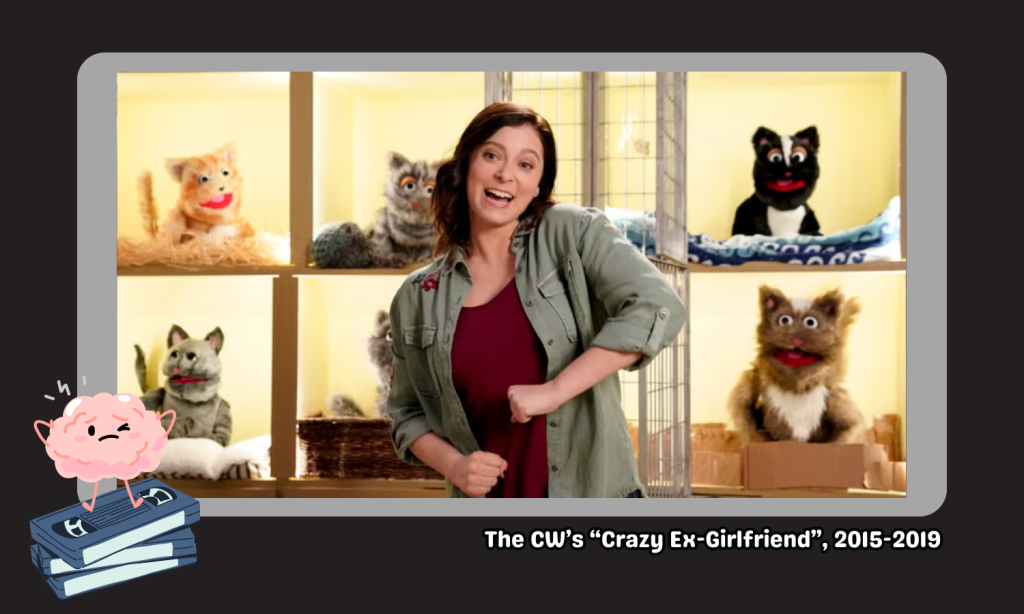
This comedy-drama musical series from the 2010s had to be on this list, and is one of my more obscure picks. The series follows Rebecca, a woman in her late 20s hyper-fixated on musicals, acting, and love. When her high school summer camp fling, Josh, bumps into her one day, her depressed life suddenly turns upside down. On a whim, Rebecca moves to West Covina, CA from New York City, quitting her successful (but not fulfilling) lawyer job and quitting her mood stabilizing medications cold turkey, just to be closer to… Josh. Cue the theatrical lights! Camera! Catchy songs about getting ready for dates and becoming a cat lady! Rebecca’s portrayal as over-emotional, impulsive, overtly dramatic, self destructive, and self centered personality cue towards immaturity… or something else. Later in the series, Rebecca is diagnosed with Borderline Personality Disorder (BPD) following a mental breakdown. Borderline Personality Disorder is, unfortunately, a diagnosis that does not have a cure. Like most mental disorders, those dealing with the symptoms can attend therapy and try different mood stabilizing and psychiatric medications, and can live a successful, fulfilling and independent life. With Crazy Ex-Girlfriend, Rebecca eventually finds her found family in California, a support group that she can fall back on and depend on, and who understands why she is the way she is and accepts her anyways. While I did appreciate that the writers of the show did name a cause to Rebecca’s erratic and obsessive behaviors, it came too late- the idea that those diagnosed with BPD are crazy, as the title infers, was set in stone since the first episode.
Check out Crazy Ex-Girlfriend at WPPL (Season 1, Season 2, Season 3, Season 4)
Inside Out (2015) & Inside Out 2 (2024)
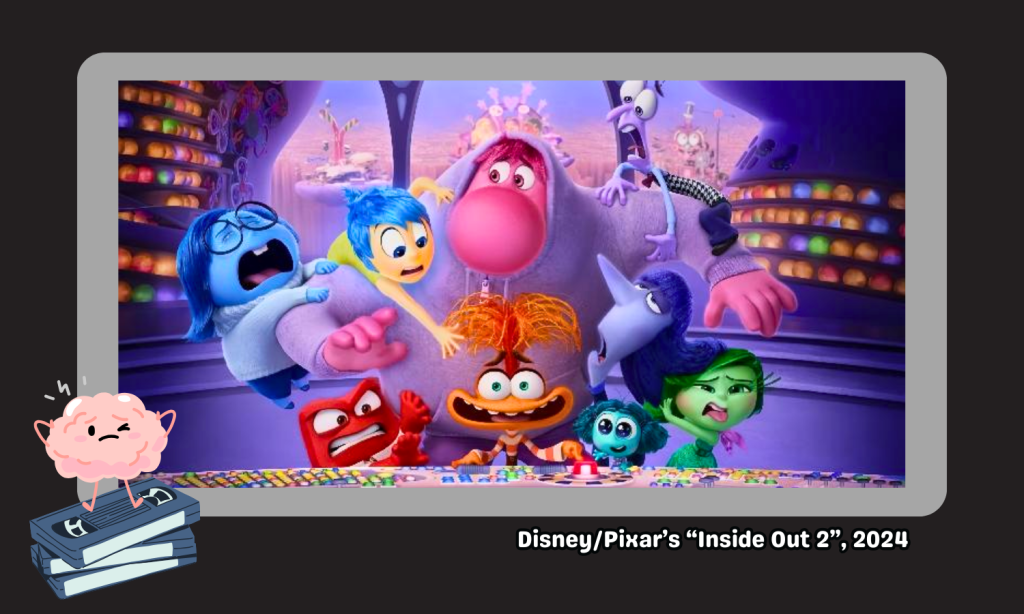
Unlike the rest of the picks in this article, Inside Out (and its recent sequel), does not portray one specific mental disorder or disability. Instead, Pixar has created, with the help of numerous psychologists and therapists, a world in which our emotions have emotions. Both films depict the emotional and mental developments of eleven-to-thirteen year old Riley, through the eyes of her various emotions (Joy, Sadness, Anger, Fear, Disgust, Anxiety, Ennui, Embarrassment and Envy), and the exploration of how our minds work in a way that simplifies the complexity yet never talks down to the audience. Memory production and storage, dreams and nightmares, imagination and imaginary friends, dissociation and depression (implied), developing and losing ones’ sense of self, building positive relationships, self doubt and anxiety attacks, are just some of the topics and themes covered in these two films. There’s plenty of lighthearted funny moments and gags, and this animated film can be enjoyed at any age, by anyone.
Check out Inside Out and Inside Out 2 at WPPL
Last Remarks
In all six subjects in this article, not a single main role, or the character with the disorder shown in the media, is performed with someone who has the disorder in real life. (The closest actor/character diagnosis is with Rachel Bloom’s role as Rebecca in Crazy Ex-Girlfriend, as Bloom has been publicly vocal about her own struggles with depression, anxiety, and OCD.) Since the late 2010s, more neurodiverse actors are getting roles in films, often welcomed into the writer’s room for a more personal touch for the script and the characters they are portraying. People with developmental, intellectual, and mental disorders have been fighting for better representation on the screen, an uphill battle, over the past two decades. There’s some films that depict mental health that are continued to be regarded as classics, but their tone and characters needed a more personal touch rather than relying on overdone stereotypes, villainization and boring troupes. While researching movies for this article, I realized how few Hollywood movies focusing around this topic feature people of color or in an international setting- although anyone can develop or be diagnosed with mental disorders. In some non-Western countries, individuals are shunned or disowned by their families or communities for seeking diagnoses or therapy; a cultural mindset that is slowly becoming less acceptable. The stigma against mental health continues to fuel these negative depictions, and film has the power to change our perspectives and how we treat others. I hope this article has helped dispel some myths about mental health and its depictions in media, and hopefully inspire young filmmakers to create better films and characters with disabilities in the future. Have a great Health Fair!
Disclaimer: Some of the films created in this era may depict outdated and harmful stereotypes, outdated diagnosis names, treatments and depictions of mental disorders, messages and story lines.
Honorable Mentions
These are a handful of films that didn’t make the cut for the list above.
Rain Man (1988), What’s Eating Gilbert Grape? (1993), Music (2021)- Negative depictions of developmentally impaired and/or autistic characters performed by individuals who do not have said disorders, whose codependency on their caretakers is a major hurdle for the non-disabled protagonist to deal with, or whose disorders used to the caretaker’s advantage or gain.
Eternal Sunshine of the Spotless Mind (2004)- Symbolic depictions of the unreliability and fragility of memories, implied depictions of depression/manic episodes as portrayed by main characters through their tempestuous relationship.
The Peanut Butter Falcon (2019) – Realistic depiction of the fight for independence and accepting found family for a young man with Down Syndrome abandoned by his biological family, performed by an actor with Down Syndrome.
Sources
https://mondoexploito.com/?p=487
https://mentalhealthmediaguide.com/why/
https://seattleanxiety.com/psychiatrist/2022/8/5/mental-health-representation-in-television-amp-film
If you need additional resources regarding mental health, reach out to a trusted and certified medical professional.


